Exploring life between the tides
- Mar 11
- 1 min read

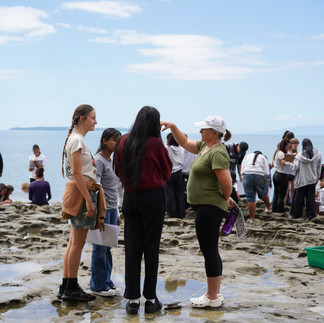
Year 12 Biology students have been studying the biological phenomenon of 'zonation,' specifically looking at the distribution of organisms found in the intertidal zone.
Venturing out to Long Bay Beach, they set up rope transects and quadrant grids along the rocks at even distances, moving from the high tide mark to the low tide mark. Black nerites - small, dark sea snails were immediately obvious, dotted across the rockpools in large numbers. Other species took a little more patience to find, but closer inspection revealed a rich and varied community of marine life.
"I saw lots of species like barnacles and periwinkles that I haven't seen before coming to New Zealand," says Natchaya Sriphai, an international student from Thailand. "When I see things I 'get it' more than I do when I'm in class."
"The organisms were much smaller than I expected, so you had to get quite close to record what you were seeing," says Phoenix Clayton. "Doing research perched on rocks that were quite slippery and uneven was quite tricky, but all part of the experience."
Students will be connecting their observations to their understanding of the organism adaptations to explain why the organisms change as they moved from the high tide mark to the low tide mark.
The data collected at Long Bay will inform a report worth 4 credits, to be completed over the next three Biology lessons.